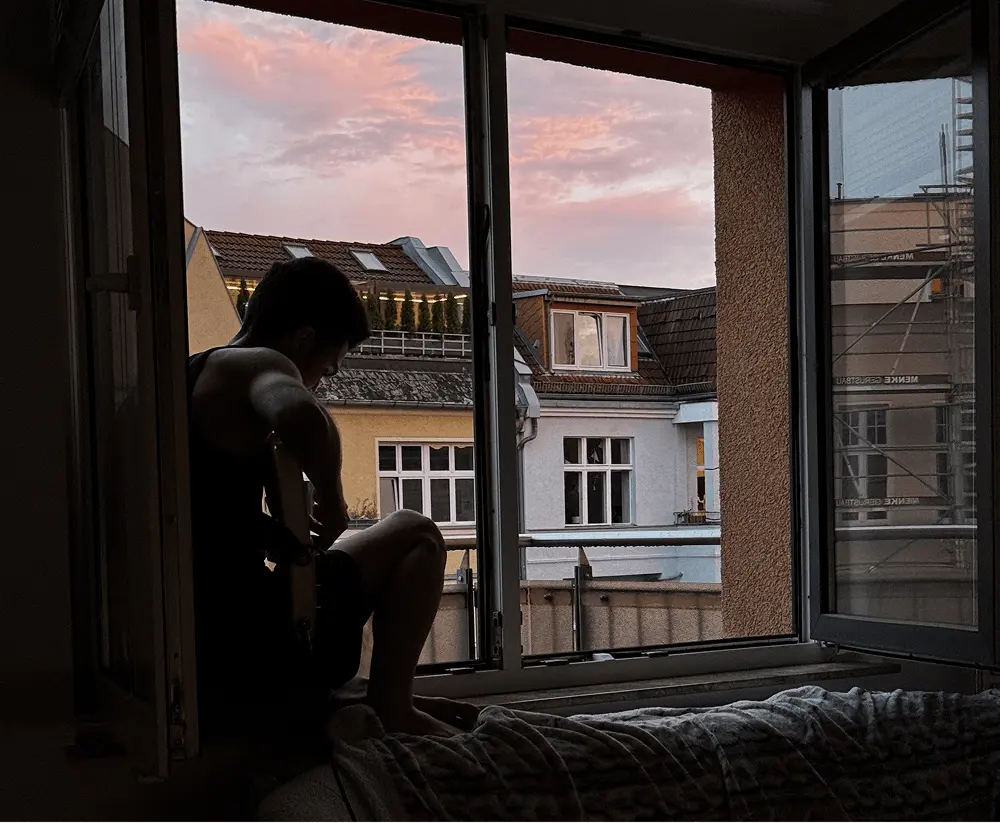
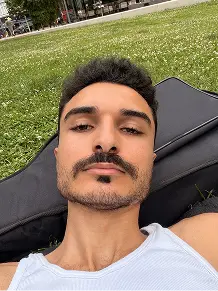
Humam Abo Alraja
Engineer & musician. Berlin.
I built Jazzr.
Louis Armstrong came on TV.
I was maybe ten.
I had no idea what I was hearing.
I didn't have internet access growing up. No way to search for it, no instrument to reach for. That sound just lived somewhere at the back of my head.
After ninth grade I spent a summer away. Already writing small bits of code for local businesses, for fun. I had a laptop. A Windows machine. It came with a few songs. One of them was Bob Acri's Sleep Away. I played it more times than I can count. I still do. He isn't widely known but I've probably slept with that song on loop more nights than I'd admit. Jazz-adjacent, quiet, and it kept the same feeling alive.
Tenth grade. I was walking past a Starbucks and heard cymbals through the door. Just a record playing inside, everything spilling out onto the street. I stopped. That same thing from when I was ten. I still didn't know what to do with it. I went in, sat down, and listened until I had to leave.
Istanbul airport.
I was seventeen.
Eight hours before a flight to Germany.
I sat in the Starbucks there and something came through the speakers. I didn't know who it was. I didn't know what to call it. I just sat and listened for all eight hours. Didn't move. Dark and beautiful in a way I couldn't explain. Something that felt like it came from somewhere serious, somewhere earned.
It always came accidentally. A door I happened to walk past. A gate I was waiting at. I never thought I'd touch an instrument, let alone play jazz someday.
By then I had years of this behind me. All those accidental encounters, all that listening. Beach House, Explosions in the Sky, post-rock, shoegaze. Music that pressed against something you couldn't quite name. When I finally had a guitar I fell into it completely.
Formed a band with friends. Jazeera 10. Dream pop, shoegaze. I played other instruments too but guitar was where I thought.
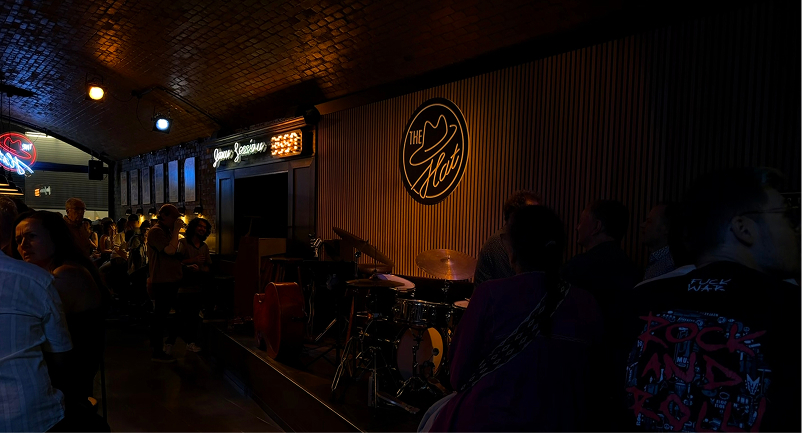
I started going to jazz bars in Berlin not just to listen but to find someone to learn from. I wanted to watch someone play and feel: that's the conversation I want. At The Hat I found Alejandro Muhech, a Berklee-trained guitarist. Talked to him after his set, got his number to arrange lessons.
I highly recommend him.
Where I was
CAGED in all keys
Shell voicings
Extensions
Secondary dominants
Some tritone subs
Some language
stuck being diatonic
Where I wanted to go
Drop voicings
Melodic minor
Bird
Voice leading
Modal thinking
Real ear training
all twelve keys without a map
The lessons were good. The problem was everything around the learning — all of it still living in the same Figma file, still growing, still barely manageable.
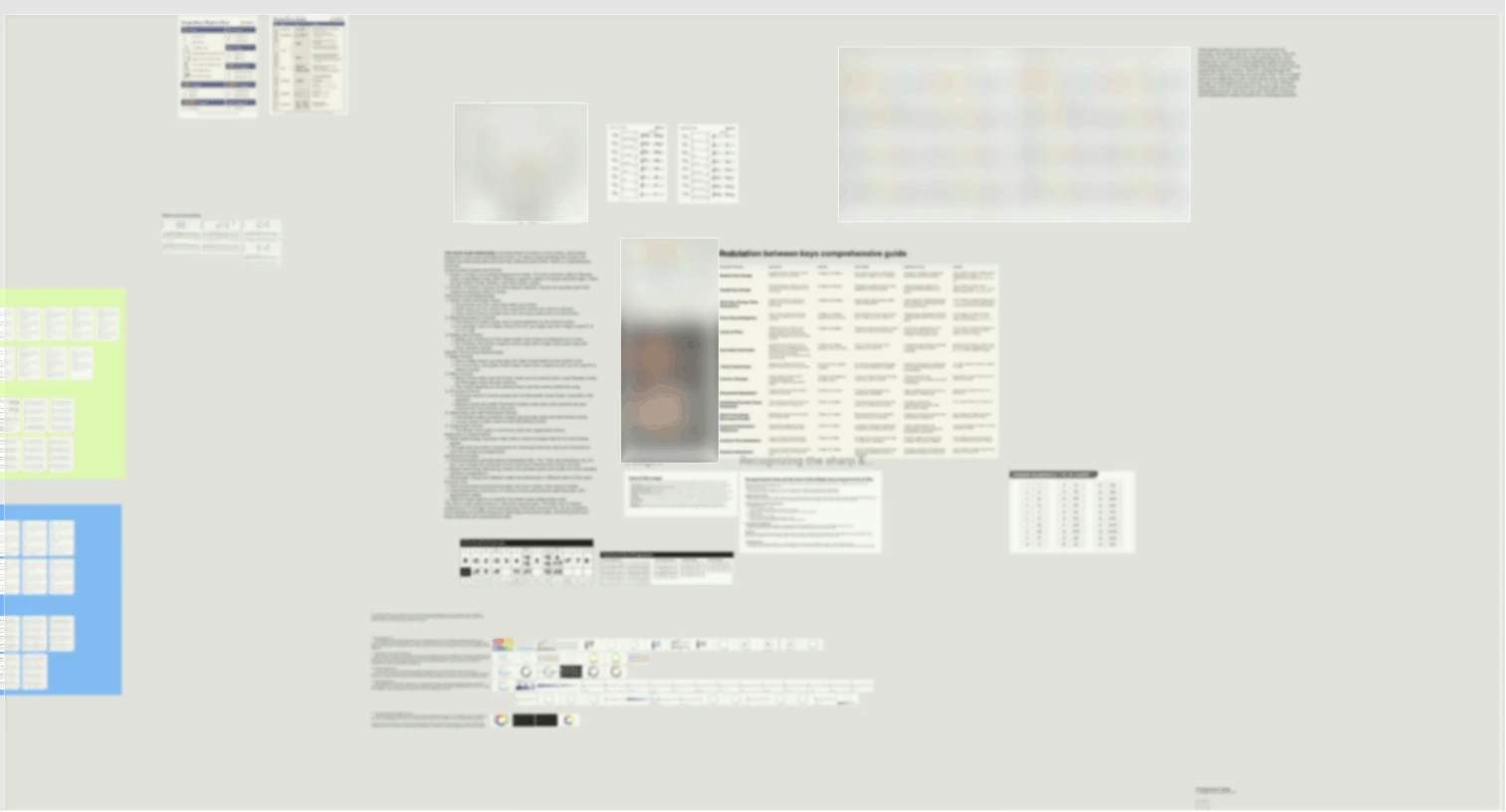
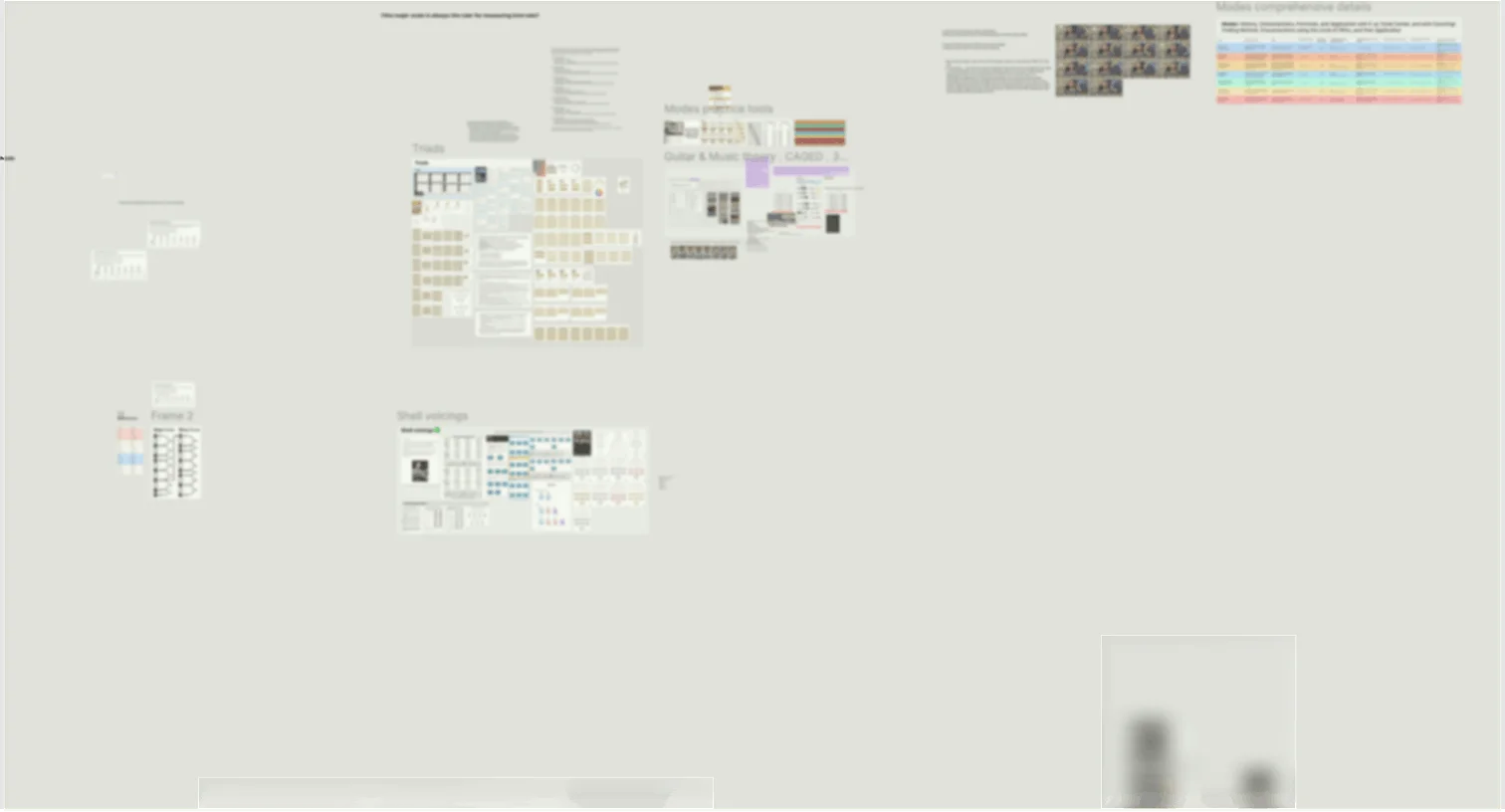
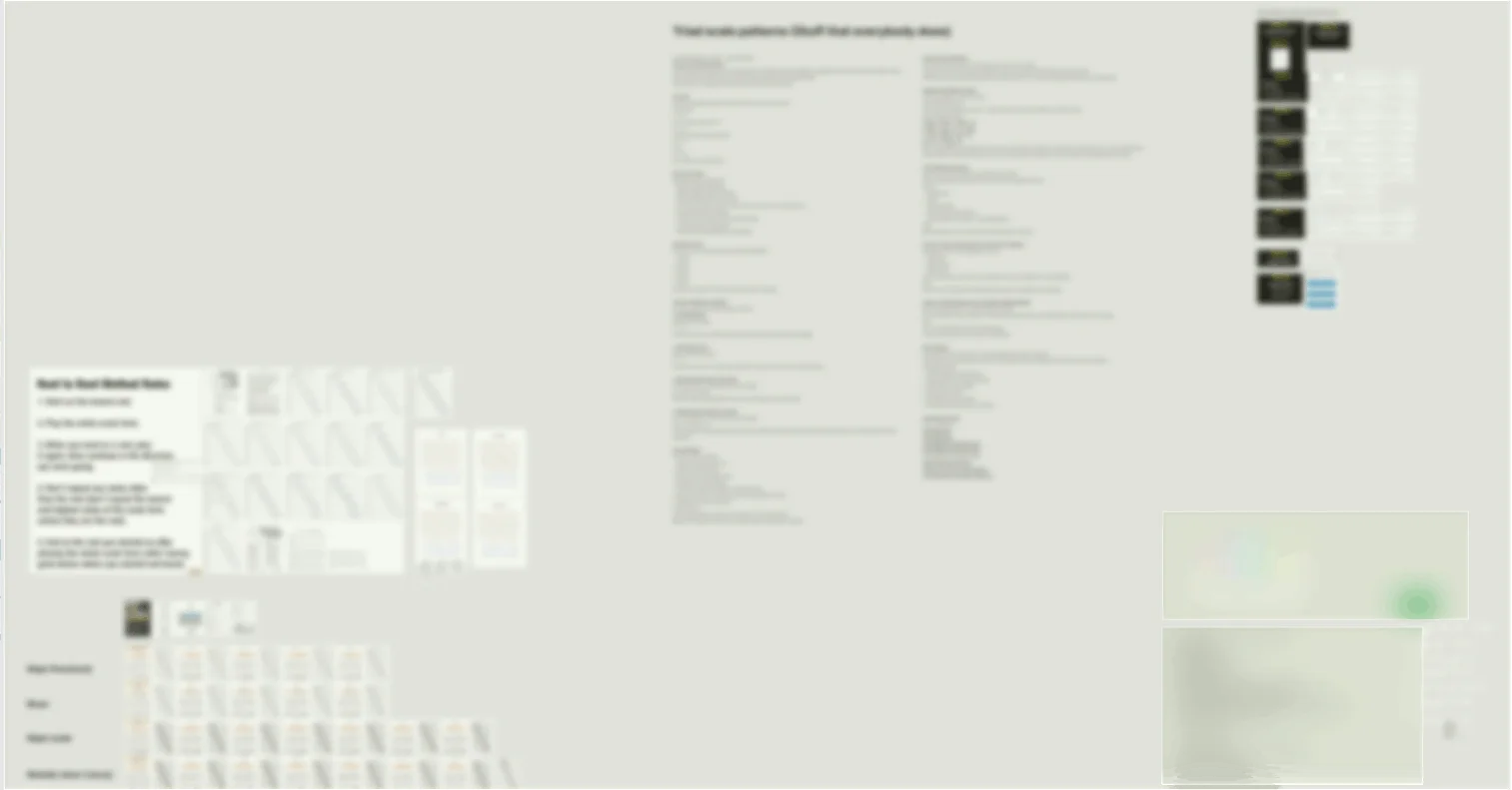
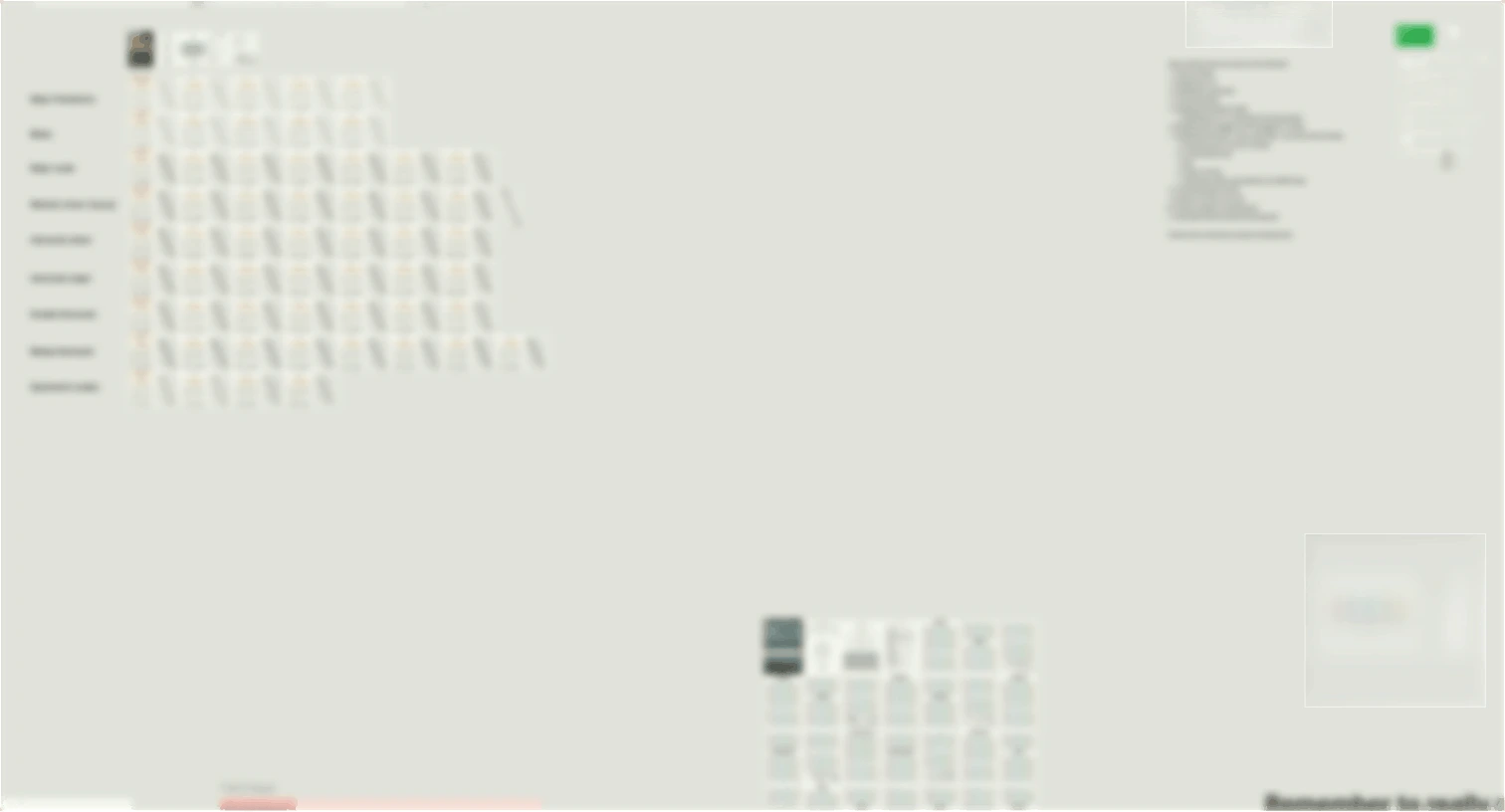
For two years my entire practice life lived in a single document. Voicings, scales, arpeggios, theory, technique, transcriptions: everything in one place, growing. It worked, until it didn't.
I didn't burn out from hours of practice. I burned out from the overhead of managing what to practice. The document became the thing I was maintaining instead of the music.
Two years of practice notes in one document
I wanted something that generates voicings on demand, shows scale positions, plays them back with real guitar sound, and exports cleanly. A chord analyzer. A rhythm trainer. A harmony lab for ii-V-Is and voice leading. Routines I could actually follow. A circle of fifths that did more than sit on a poster. Something that makes the fretboard's geometry legible. Not shapes to memorize but relationships to hear, the way a pianist or saxophonist would. No social layer. Just the tool.
If you spent years listening before you could name what you were hearing, I hope it saves you some of that overhead.
The Story
Guitar & bass. Recorded for this.
Listen